
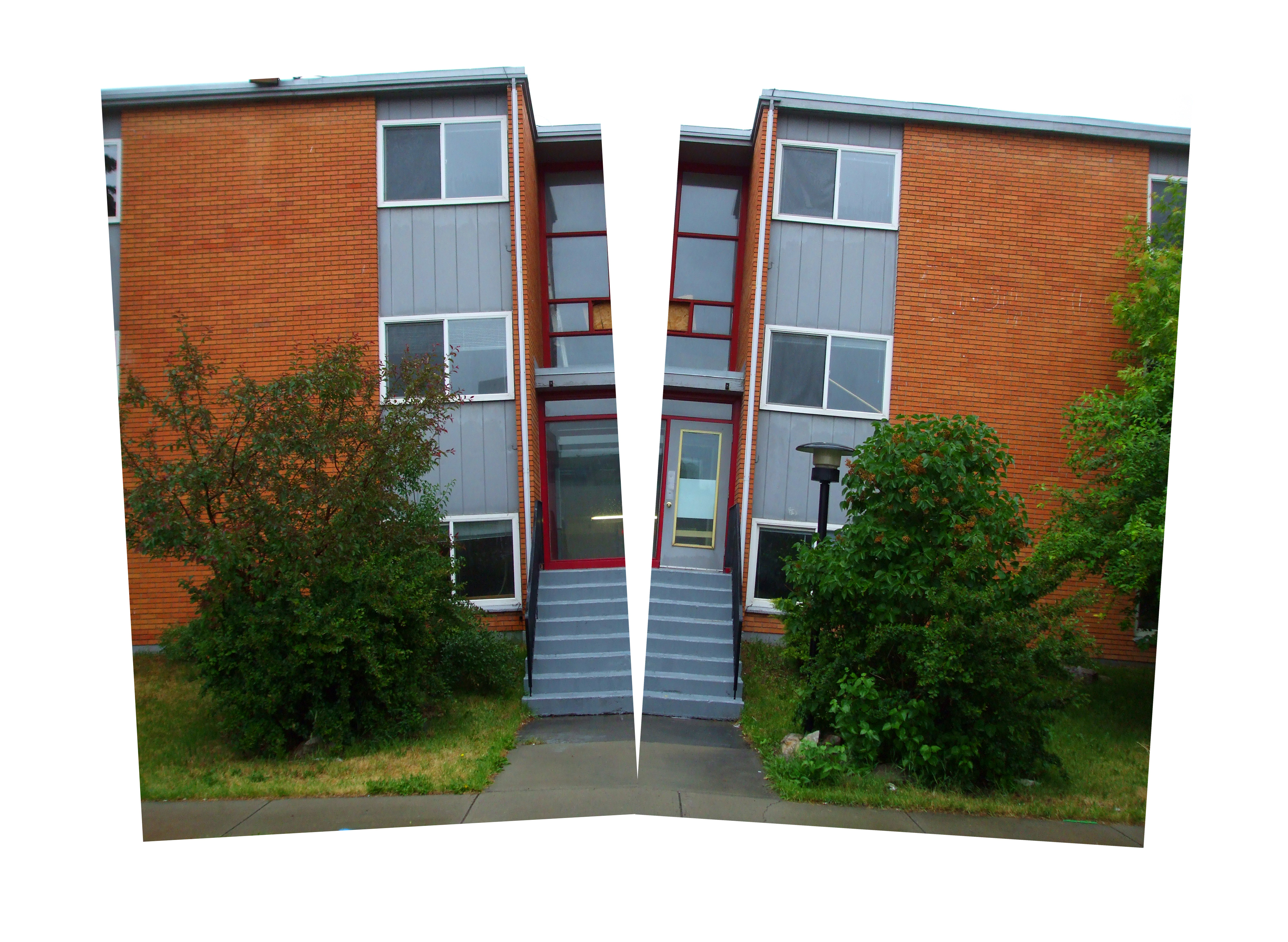
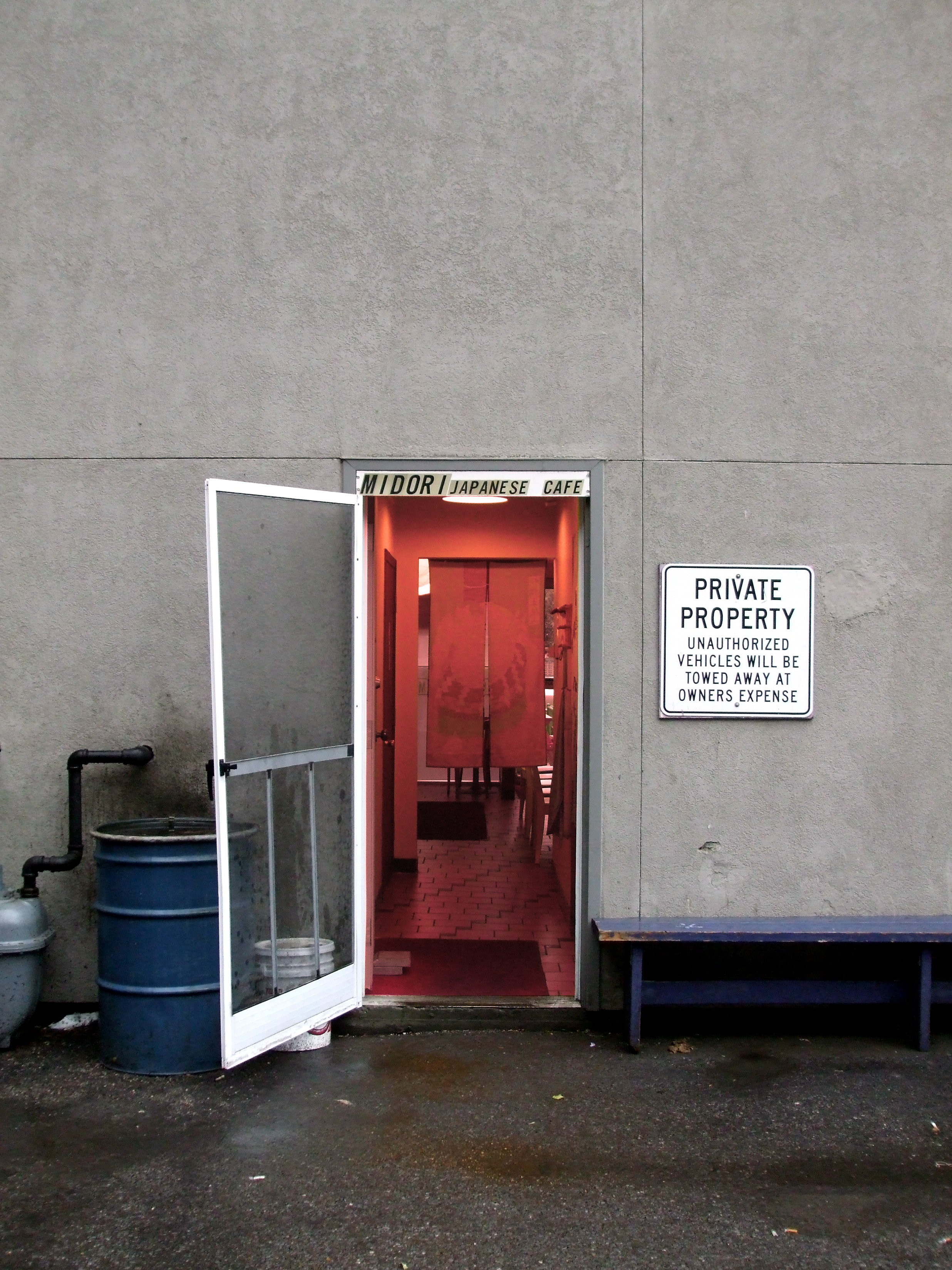
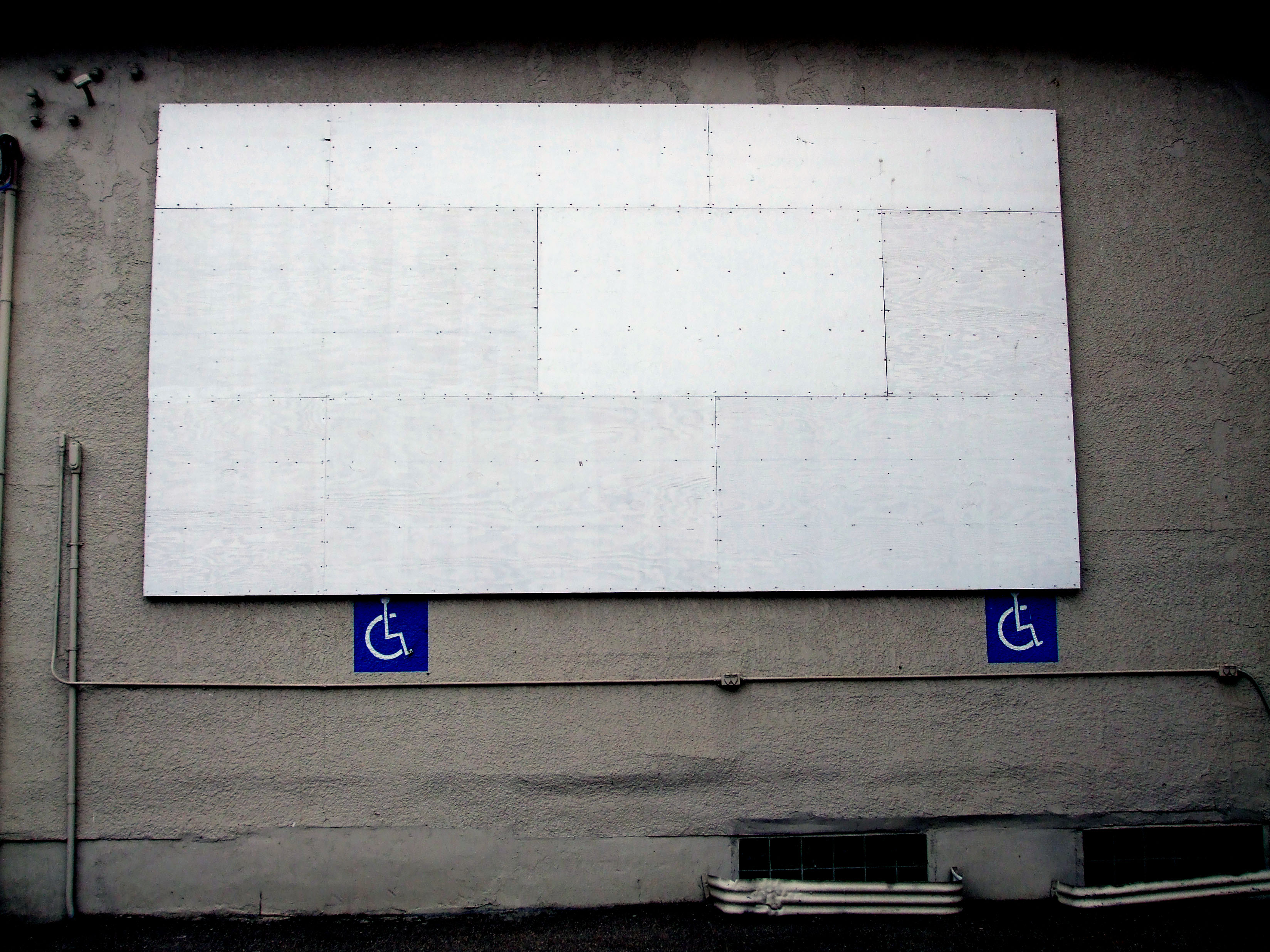
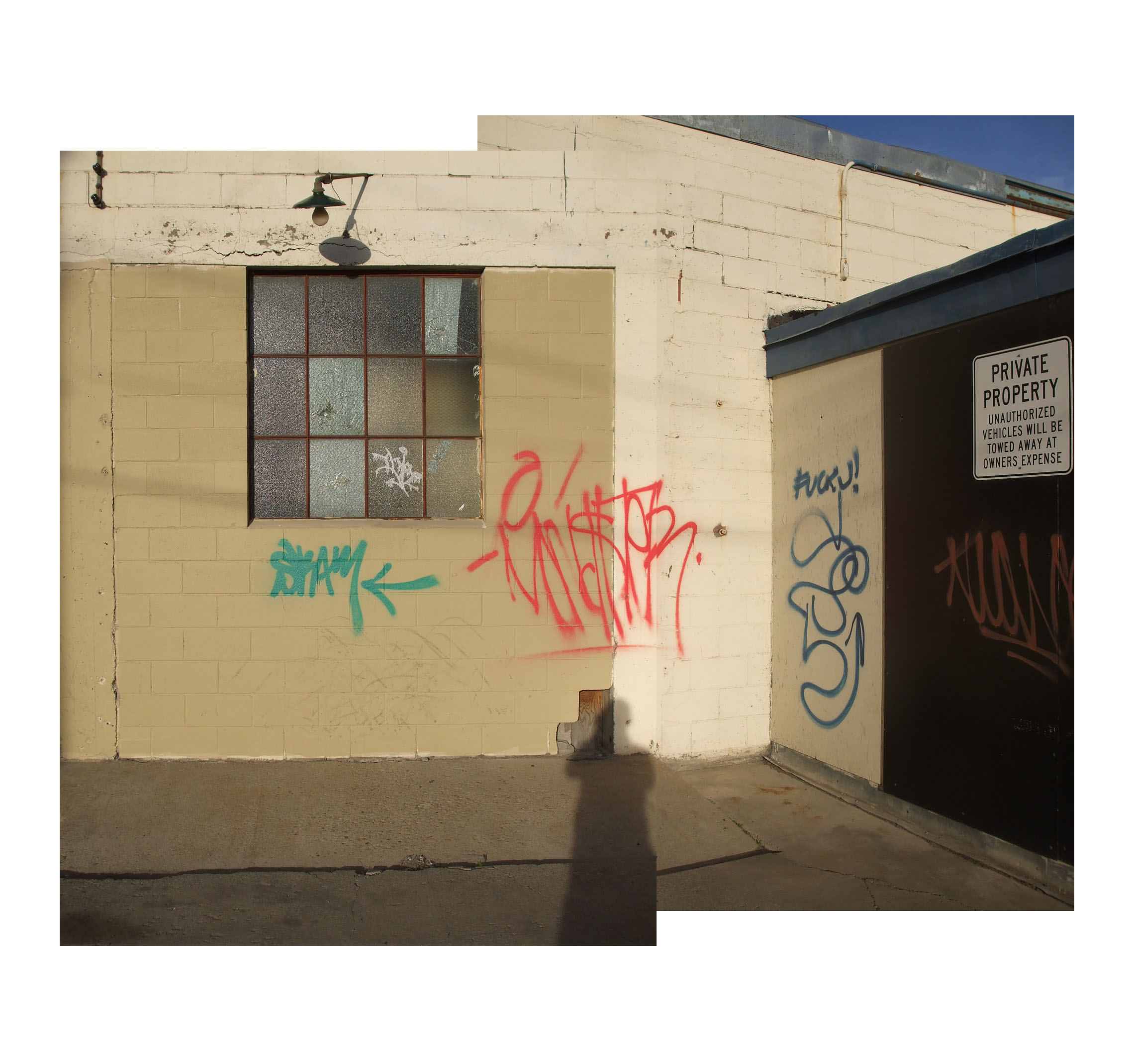
There’s something I like about signs that have ceased to serve their initial purpose. I like how these signs that once supported an ad or message, trying to convince, prohibit, persuade, or sell us something become transformed through neglect, abandonment and unintended alteration (be it through the inclusion of a shadow, a graffiti writer’s tag, a broken shutter, or peeling paper). These signs when composed within a photograph create a new language, both on their own and in relation to other signs and objects. Text becomes image and image becomes text.
Tate Etc. Issue 16 – Summer 2009 has an article by David Batchelor on Monochromes, which can be found on line at: http://www.tate.org.uk/tateetc/issue16/colourchart2.htm. The passage on Found Monochromes was of particular interest to me. I had already started to photograph white boards and signs, but the article served to sharpen my attention to the idea of Found Art. Whereas the Ready Made was an everyday object transformed into art through its inclusion in the gallery space, Found Art is something discovered in the world that references an idea, or object, that has its origins in the art world. David Batchelor’s Found Monochromes would be one example. Another would be buildings (under construction, or renovation) wrapped in tarps which are reminiscent of Christo’s wrapped buildings and objects. Photographing Found Art could be just a documentary exercise, but I tend to think of it more as a hybrid of documentation and creation: the photograph is in itself a new work and put into an art context can be seen as such.
 Edward Lewis