Author: Edward Lewis
Edward Lewis is an artist, writer, and photographer.
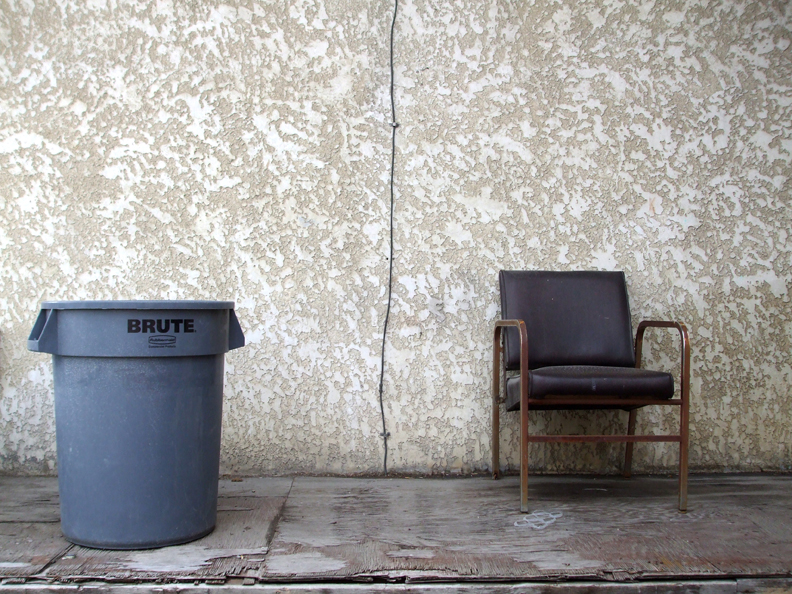
Brute
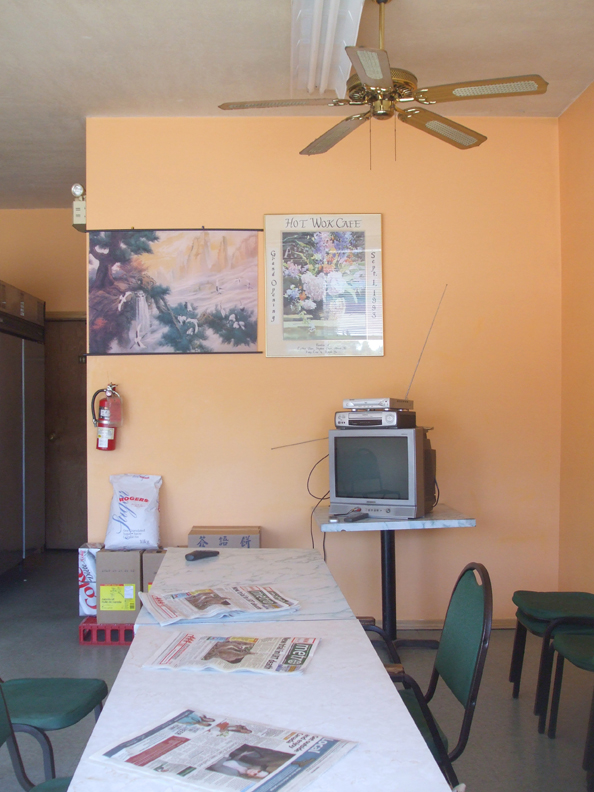
Hot Wok Cafe
Player’s Entrance Only
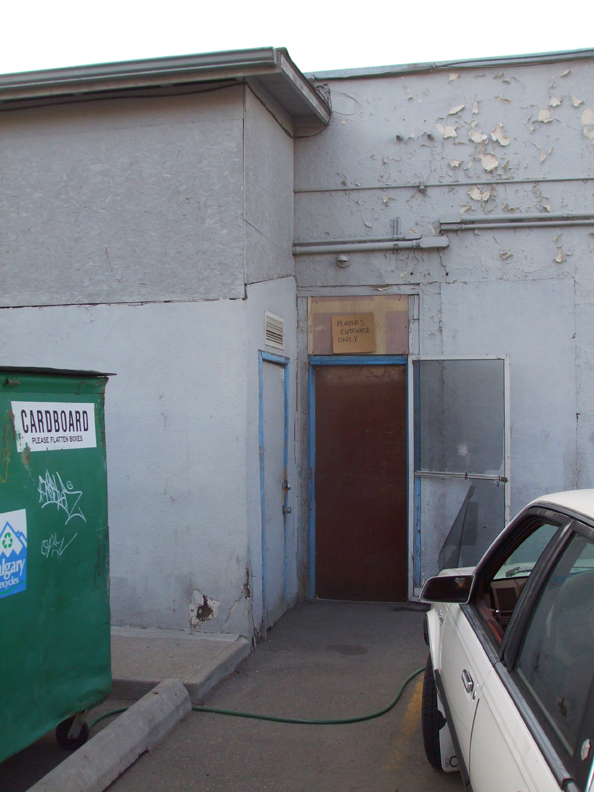 Who wants to use the front door when you can use the player’s entrance?
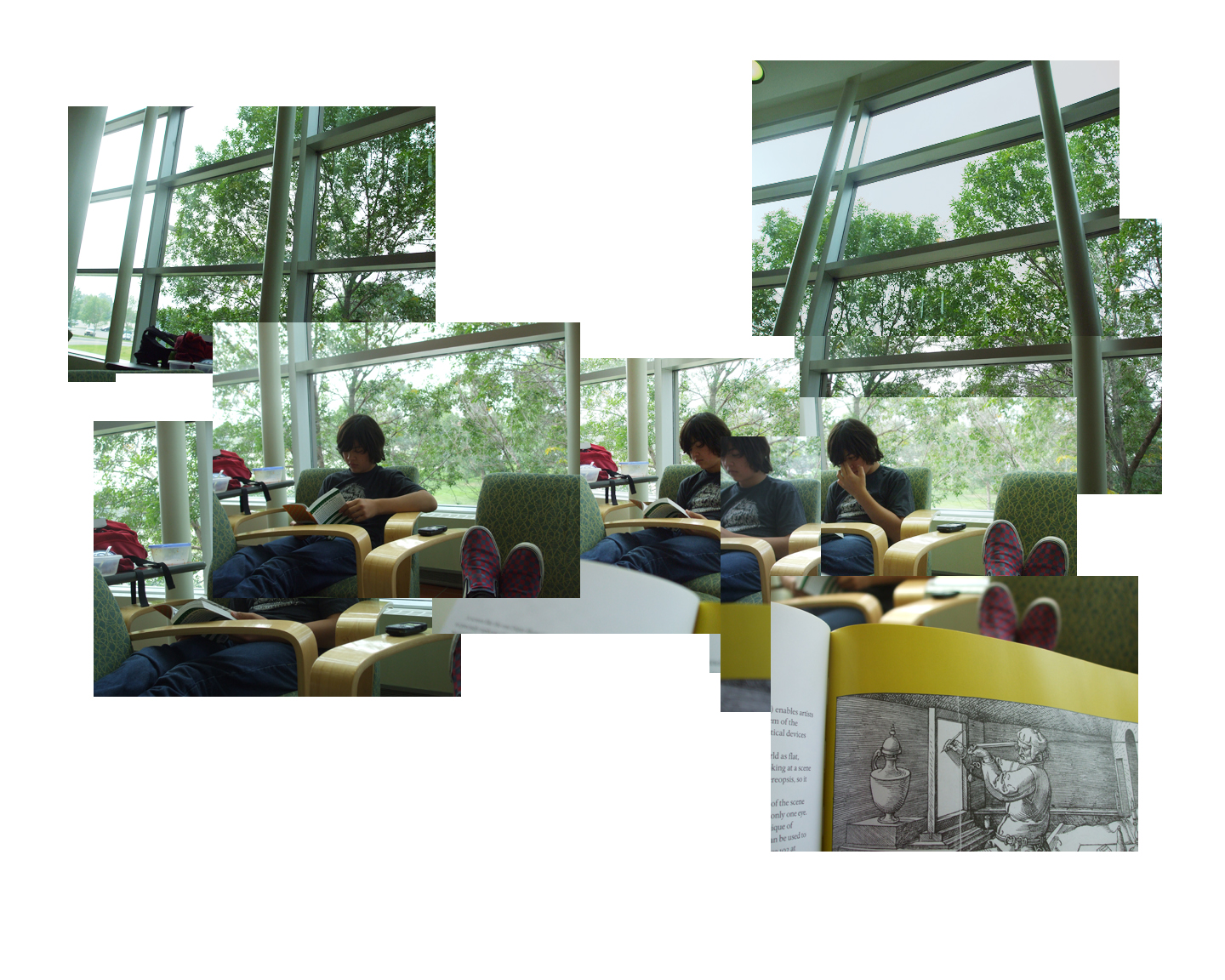
Theo
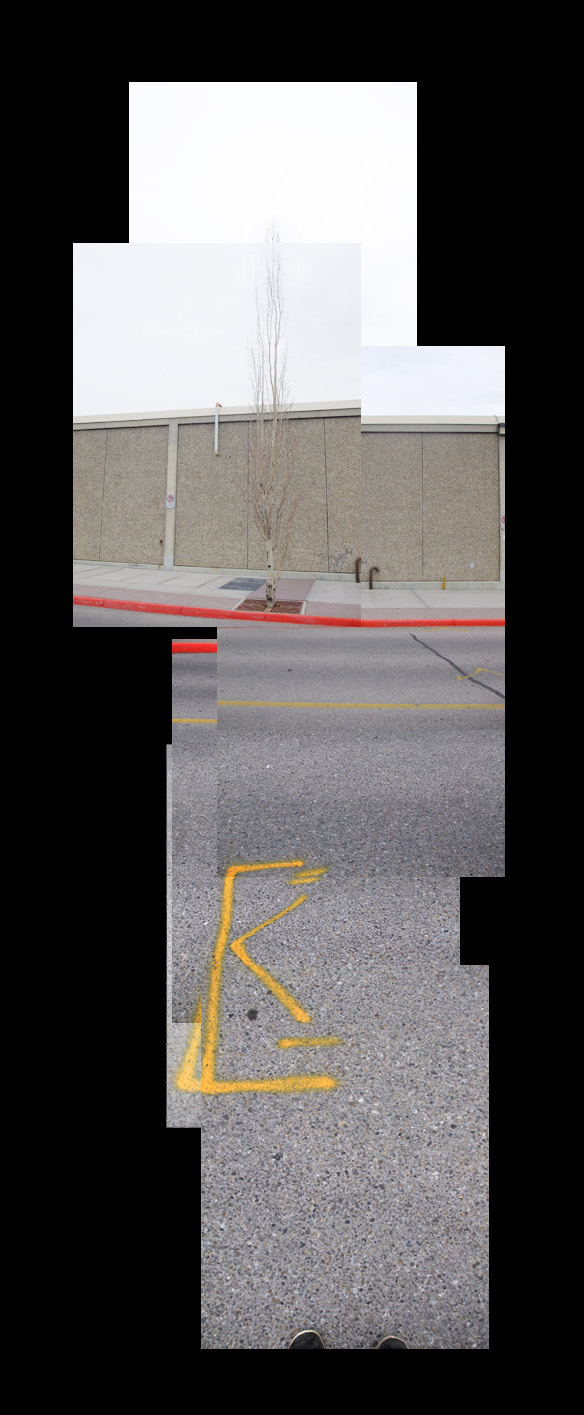
Chinook Mall
Learning from Hockney
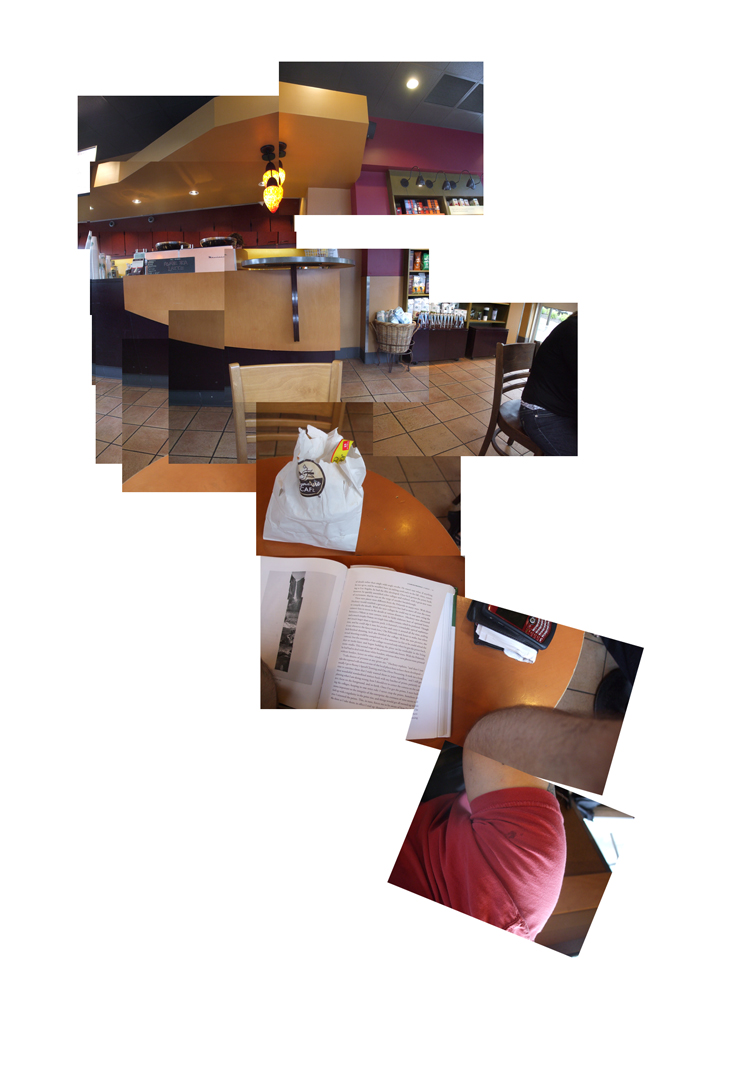 “I mean, clearly, all along I’ve had an ambivalent relationship to photography – but as to whether I thought it an art form, or a craft, or a technique, well, I’ve always been taken with Henry Geldzahler’s answer to that question when he said, ‘I thought it was a hobby.'” – David Hockney, from Cameraworks: Staring Down a Paralyzed Cyclops (1983), in the book, True to Life, 25 Years of Conversations with David Hockney, Lawrence Weschler.
Selection and Construction
Photographs can be divided into two main types: those that are the result of selection and those that are the result of construction.
Documentary photographs, and photographs in the documentary style, are an example of the selective type: the photographer imposes an order on a found scene by choosing a vantage point, a frame, a moment of exposure and a plane of focus. In photographs like this a photographer, as Stephen Shore puts it,” solves a picture, more than composes one.” Walker Evan’s, Gas Station, Reedsville, West Virginia, 1936 is a good example.
Although studio photographs also involve selection, the emphasis is more on staging or creating a subject prior to shooting and then manipulating the image extensively post shooting.
A hybrid would be post shot construction – the initial photograph being initially “solved” at time of shooting, then manually or digitally manipulated on the computer or in the darkroom, typically for stronger aesthetic effect.
Through a glass darkly

I took this photo a few years back. It’s the cover image of Dostoevsky’s The Idiot as seen through a glass of water. I had just put the book down on my bedside table and was getting ready to go to sleep. I glanced over at the light and noticed the effect of the glass. Just a few days ago, when flipping through the book 50 Photographers You Should Know, I came across the entry on the Czech photographer Josef Sudek. Back at home I plugged the name into Google to see if I could find some more examples of his work and came across the image below.
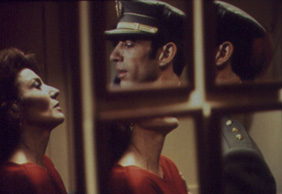
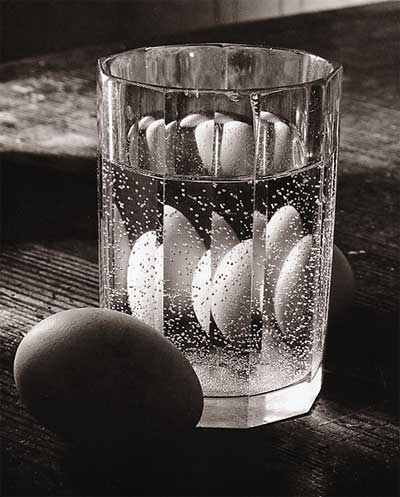 The last image is a film still from Pedro Almodovar’s Flower of my Secret. A slightly different effect, but none the less interesting.
I’ve been trying to sort out what it is that intrigues me about these pictures besides there being a curious visual effect. I read over what I had written previously and sensed that there was something wanting…what’s the punchline? It has to do with the relationship between what we know of a subject and how it is represented visually, so that the image serves to represent more accurately what we know of the thing, the person or the event. In Almodovar’s image we see the two former lovers reflected in a collection of mirrors on the wall – their reflections fragmented in such a way so that they appear both together and apart. In my photograph the fragmented view seems more fitting a representation of Dostoevsky’s somewhat fragile and broken protagonist.
 Edward Lewis